Planning to create a website for your business using CMS?
CMS is indeed the best way to build a website without using code, but do you know that most people get confused between WordPress and Joomla?
Well, WordPress vs Joomla is very contradictory. CMS both have their own fan base because it’s open source and powerful. Both platforms operate for millions of websites.
But in 2025, the question isn’t simply which CMS has the most features. It’s a CMS that helps your business operate faster, scale better, and deliver long-term ROI.
This guide reveals how each platform works, its strengths and limitations, and which business use-cases each CMS wins. Read this blog to know the best CMS for your business.
The CMS Foundations
Basically, CMS is an advanced platform of website-building techniques that allows you to build a website without coding. It has a predefined dashboard where you add and manage features to build an aesthetically appealing website.
Think of it as your online control centre. You focus on strategy, messaging, products, and branding—while the CMS handles the architecture.
Like all other platforms, every CMS also has two different parts:
- Backend (Admin Panel): where you edit, configure, upload, and manage.
- Frontend: what visitors actually see—the face, the smile, the storefront.
All the real magic happens under the hood through:
- Templates or Themes (design layer)
- Database (your content, users, media)
- Plugins or Extensions (custom functionality)
That trifecta is what transforms a CMS from “just a website” into a growth engine.
WordPress vs. Joomla
To get a better solution, here is the highlight of both CMS tools.
WordPress: The Global Front-Runner

More than 40% of websites use WordPress as their CMS.
The WordPress ecosystem has a crazy user base; this is not just a bubble, but it’s built by the hard work of many developers. With WordPress, you get thousands of plugins, integration and tool options that give you an unfair edge in this competitive market.
Key WordPress Strengths
- Very easy to start and set up a site
- Vast plugin ecosystem
- Excellent on-page SEO and blogging tools.
- Huge developer talent pool.
WordPress is the most popular choice of people who want to create a Marketing website, blogs or content hubs, SME catalogues, Scalable eCommerce, Corporate websites, and services businesses. Overall, it is a full package solution for startups that are launching their website for the first time.
Joomla: The Architect’s CMS
If WordPress is the charismatic marketing leader, Joomla is the CTO with surgical precision.
Joomla is inherently structured and robust.
Its core includes advanced content management and user permission systems that WordPress normally requires plugins to achieve.
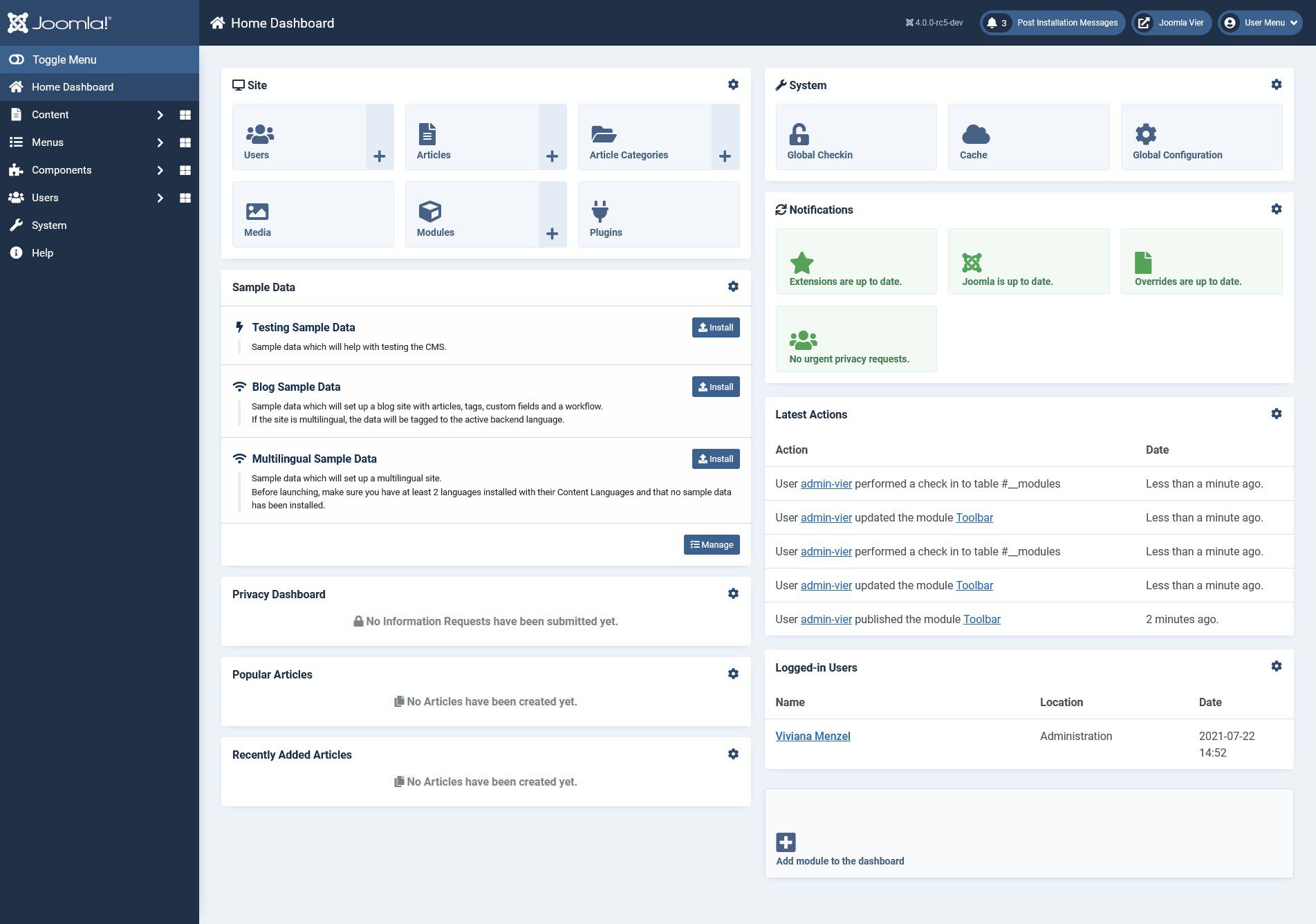
Key Joomla Strengths
- Best native multilingual system of any CMS.
- Sophisticated user roles & access control.
- Superior content segmentation and categorization.
- Powerful enterprise features
- Technical configuration control with minimal 3rd-party dependencies.
Joomla is the most preferred CMS for business-related to Government or public sector sites, enterprise intranet/extranet, complex membership portals, corporate knowledge, multilingual global platforms, and so on. In short, a business that needs a more powerful structure and is ready to compromise with dashboard friendliness. It is a super CMS solution for highly regulated organizations.
Understanding how content is displayed matters for performance and scalability.
Static Pages
Think: corporate landing pages.
- Homepage
- About
- Legal pages
- Careers
- Sales pages
- Authority content
They rarely change.
Static pages load fast, rank well, and are perfect for conversion.
Dynamic Pages
Think: scalable hubs of content.
- Blogs
- Product listings
- Staff directories
- Resource libraries
- Membership profiles
- Events
- B2B knowledge bases
Dynamic structures use templates, not manual labor.
Example:
- You don’t build 10,000 product pages individually.
- You build one product template, and the CMS generates it on demand.
Native Features: Joomla Wins… But Not Really
Joomla ships with more “core” functionality than WordPress. Permissions, multilingual, nested content categories—it’s strong.
But here’s the reality:
In 2025, real businesses rarely rely on vanilla cores.
Plugins and extensions change everything.
- WordPress gets advanced CMS capabilities via plugins.
- Joomla gets web design experience via template frameworks.
In the practical world, feature parity exists once you install 5–30 plugins/extensions, which is what most businesses actually do.
Plugin Ecosystem: WordPress Is a Galaxy
WordPress plugin economy is a planet-sized advantage.
You get:
- SEO tools
- No-code builders
- eCommerce at scale
- CRM integrations
- Security layers
- Page speed boosters
- Marketing automation
If you’re selling products, generating leads, or scaling demand → WordPress wins every time.
Joomla’s extension library (8,000+) is smaller, but leans toward advanced use cases.
Its developers build for durability, not fashion.
CMS Popularity: Why WordPress Dominates
Not because it’s objectively “better” in every way.
But because it delivers time-to-value.
- Non-technical founders adopt WordPress faster.
- Agencies teach WordPress first.
- Every YouTube tutorial uses WordPress examples.
- SaaS integrations prioritize WordPress.
- Marketing tools speak WordPress natively.
- Hiring WordPress talent is frictionless.
It’s not just features—it’s a network effect.
When a technology becomes an ecosystem, business adoption compounds.
Security: A Tale of Two Worlds
In terms of security, WordPress Vs Joomla both have their own area of excellence.
WordPress Security
Critics love to say:
“WordPress gets hacked because it has too many plugins!”
The truth?
WordPress’s popularity attracts bad wives, just like Windows or Android.
But:
- Strong hosting
- Regular updates
- Managed backups
- Enterprise-grade security plugins
Turn WordPress website into a fortress.
Joomla Security
Joomla’s permissions system and core architecture are more conservative.
It’s stable.
Less plugin chaos.
Fewer inexperienced users.
Government projects choose Joomla for a reason.
Performance & Speed: Modern Hosting Levels the Field
2025 website speed is a hosting + caching + CDN game.
On equal infrastructure:
- WordPress can be blazing fast.
- Joomla can be equally fast or even faster.
Where people fail:
- Cheap shared hosting
- Bloated plugins
- No image optimization
- Theme builder overload
Choose:
- VPS
- Cloud hosting
- LiteSpeed
- Nginx
- Global CDN
Your CMS stops being the bottleneck.
Developer Ecosystem & Talent Availability
This is where WordPress crushes everyone.
Hiring a WordPress developer?
Five-minute job.
Hiring a Joomla architect?
Five-day hunt.
If your founder is non-technical or your marketing team runs the site, WordPress is business-safe.
If your CTO is designing a long-term data architecture, Joomla is CEO-grade.
Multilingual: Joomla Is the King
If your business serves Europe, the Middle East, or any global audience, then you need a multilingual support website.
Here, Joomla wins over WordPress because it has built-in multilingual support that offers amazing features to build multilingual sites for Corporate, Government, or NGO.
On the other hand, WordPress requires Plugins to add that feature. This is also not equal to Joomla’s features.
eCommerce: WordPress and WooCommerce Dominate
WooCommerce controls the small-to-mid market eCommerce world.
- Product catalogs
- Service sales
- Subscriptions
- Booking
- Dropshipping
- POS integrations
Plugins → Automations → Payment gateways → ERP connectors
WordPress wins 99% of the time.
Joomla has VirtueMart, HikaShop, and others.
They work—just expect a steeper learning curve.
Total Ownership & Cost
The cost varies depending on your skill and knowledge. To get an ideal costing for your project, you can contact a WordPress development agency that is also an expert in Joomla Development Services. Here is an overall comparison of WordPress vs Joomla to know the lump sum factor of cost.
WordPress
- Low barrier to entry
- Lower development cost
- More DIY potential
- Cheaper long-term marketing
Joomla
- Higher setup cost
- Lower plugin dependency
- Lower long-term maintenance risk
- Higher developer quality
If you’re building a scalable consumer-facing brand → WordPress.
On the other hand, if you’re building a system-of-record → Joomla.
When Each Platform Truly Wins
Now let’s see where you can go with WordPress and which Joomla will best match for you.
| Choose WordPress | Choose Joomla |
| Fast launch matters more than architecture | You manage structured data |
| SEO is part of your growth engine | Multi-role permission systems matter |
| You need landing pages, blogs, funnels, and CTAs | You run member/user networks |
| Your team isn’t technical | Enterprise policy governs the project |
| You want a talent pool and agency ecosystem | You want “less plugin dependence” |
| You want to sell — now | You prefer control over convenience |
| You want continuous optimisation | You deploy multilingual at scale |
The Hard Truth: There Is No “Best CMS”
A CMS isn’t a trophy. You can’t say if WordPress works for your friend, then it will work for you, too. To find the right CMS, you need to understand its infrastructure, a growth engine, and a digital balance sheet line item. This way, you are ready to find a real solution. Your real decision is strategic:
- Are you building an audience or a system?
- Are you scaling content or controlling content?
- Are users the priority or the administrators?
- Do you really want to have flexibility or governance in your site?
Pick the one that aligns with how you make money.
Finally, Which CMS Is Best for Businesses in 2025?
If you want velocity, brand presence, traffic, and revenue, then WordPress is the reigning champion.
Joomla is your dependable ally for full control, architectural integrity, and long-term resilience.
Both platforms are mature.
Both can take your company to market.
Both can operate at a global scale.
But leadership is about decisions under constraints.
Your mission isn’t to impress developers—Your mission is to build a digital engine that converts attention into revenue.
And once that mindset crystallises, the right CMS becomes obvious.